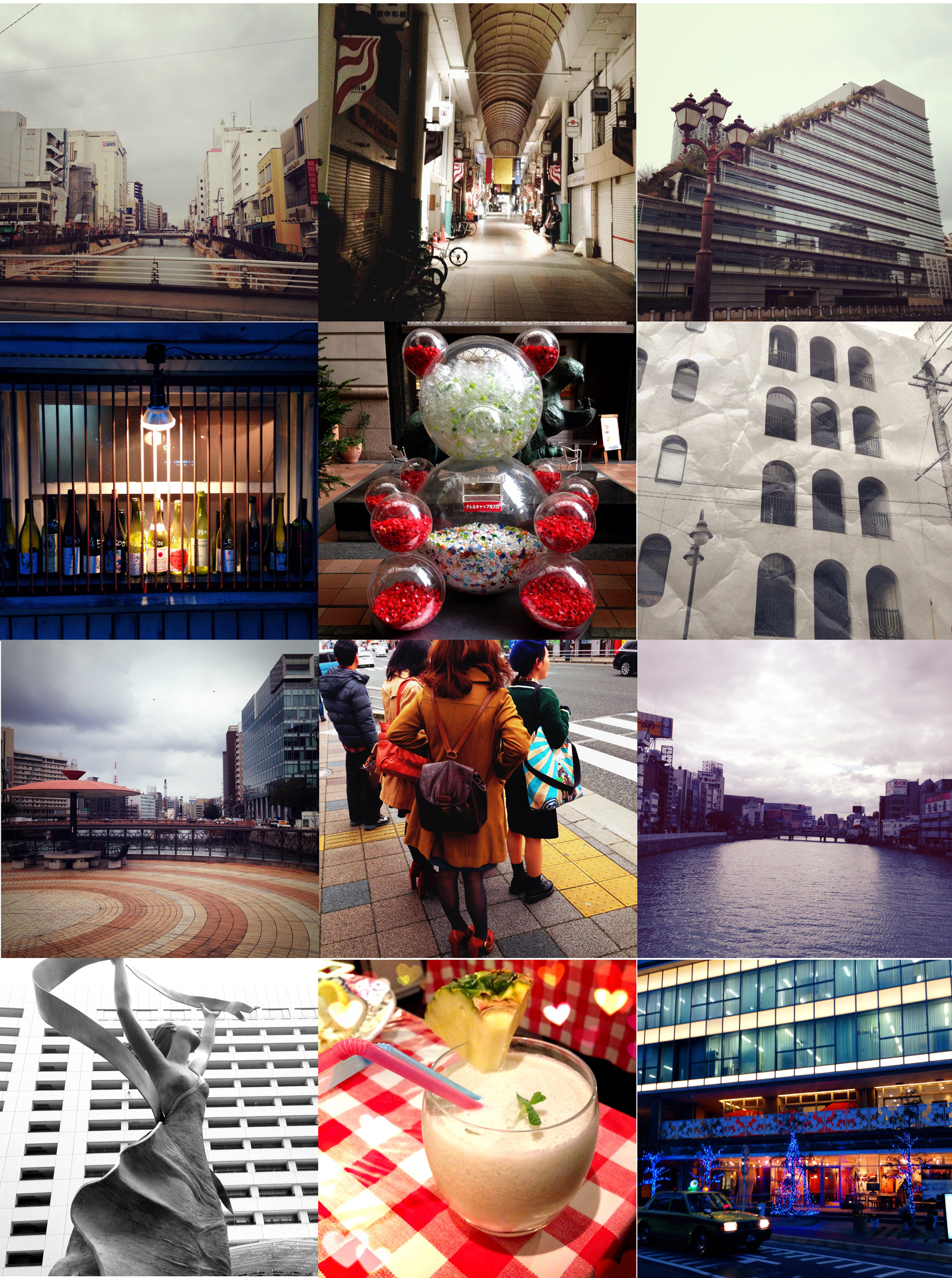
Showing posts with label JAPAN Fukuoka. Show all posts

Saturday, January 3, 2015

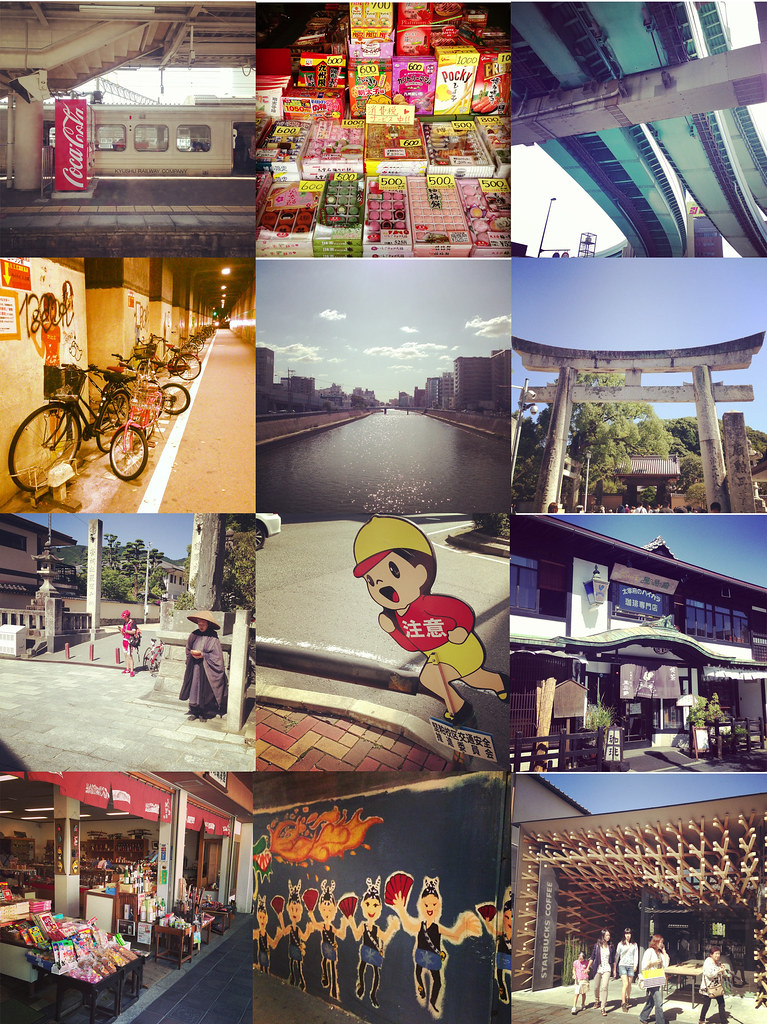
Drains of Kyushu

Part of a collection of the many elaborate manhole covers in Japan. 

Fukuoka

Fukuoka

Fukuoka

Nagasaki

Monday, March 10, 2014

Can't Seem to Get Enough of Fukuoka

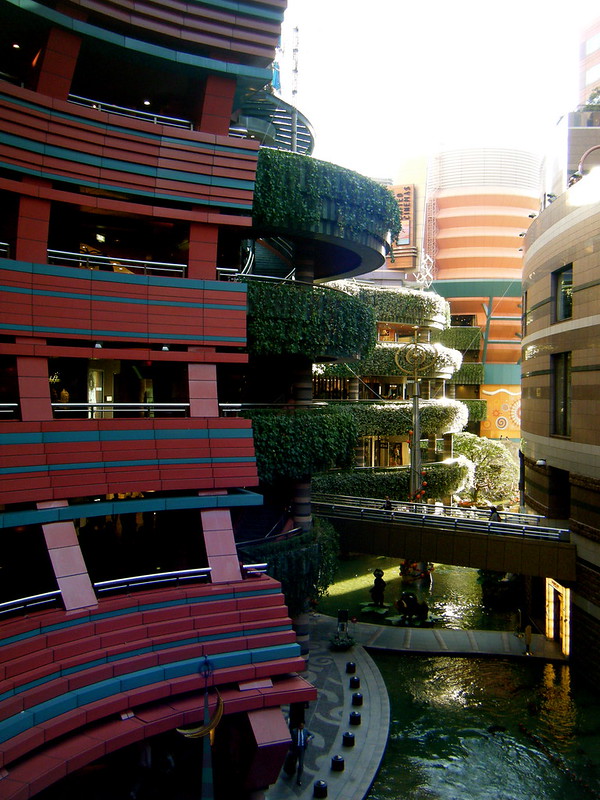
It's true. The city seems to get more beautiful each time I visit. 


IMG_6700

Friday, December 20, 2013

What did I buy in Fukuoka and Nagasaki?

I've become a frugal traveler while in Japan, since my trips are now practically occurring every weekend.

Long gone are the days when I used to bring an empty suitcase to Japan and haul back my own body weight's worth of souvenirs and clothing.  Now I have neither the space or the money for such indulgences, so I decided that I will commemorate my time in Japan by purchasing a pair of chopsticks from every town I visit. This is cheap, space-efficient, and practical (as I currently one have three pairs of chopsticks at my house). 

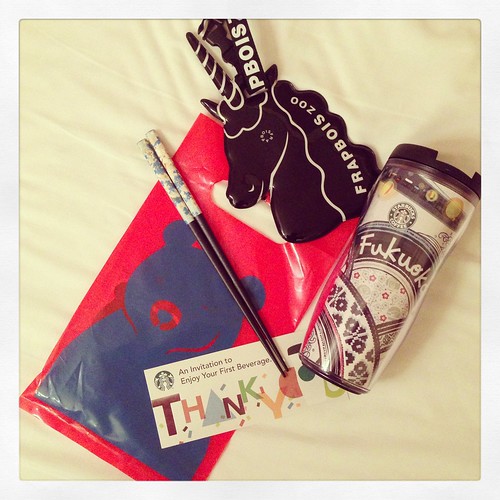
In Fukuoka, I bought a little extra, mainly the Starbucks mug, which I had wanted for some time, and a unicorn luggage badge from Frapbois, which was too good to pass up. 

IMG_0552
Chopsticks, unicorn luggage badge, and Starbucks tumbler

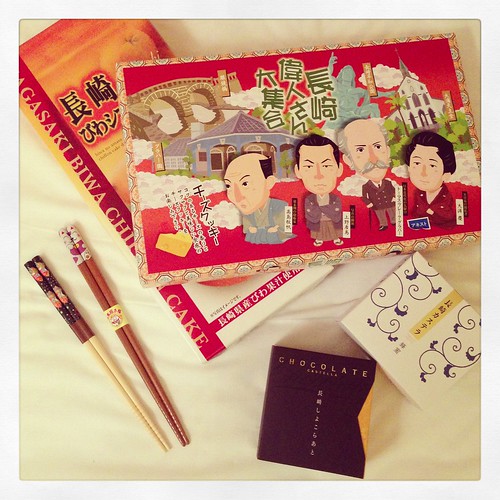
In Nagasaki I picked up two pairs of chopsticks near Glover Garden, as well as some edible omiage for my coworkers. The castella I saved for myself. 


IMG_0551
Chopsticks, Omiage, and Castellas

Saturday, November 30, 2013

Journey to the Daizaifu Tenmangu Starbucks

To wrap up a very successful second visit to Fukuoka, I decided to spend my last morning in the city with a relaxing trip to the famous Dazaifu Tenmangu Starbucks.

When I was in Fukuoka five years ago, this place did not exist, and I had no reason to travel 40 minutes from the city center to Dazaifu. Now with the presence of one of the most iconic Starbucks stores in the world, I thought I world at least make a trip there for a coffee.

Little did I know that my relaxing sojourn would turn into an epic crusade.

First of all, there are two Starbucks in Dazaifu. One of them is the famous Starbucks at Tenmangu Station, the other is a drive-through Starbucks in a quiet suburb of the city.
Yeah, I know. I know because I went there by mistake, and my 40 minute commute became 2 hours as I studied my GPS thinking,
“Goddamn this place is really off the grid.”

So my point is, be careful when you look up direction for Starbucks in Dazaifu. Don’t do what I did.

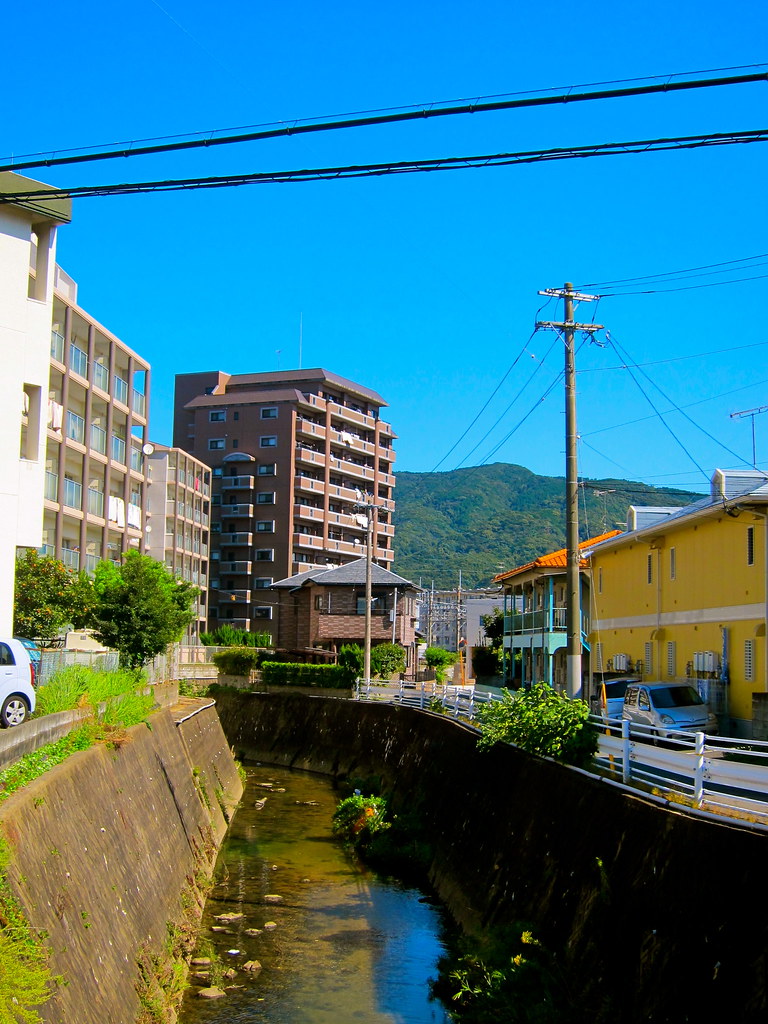
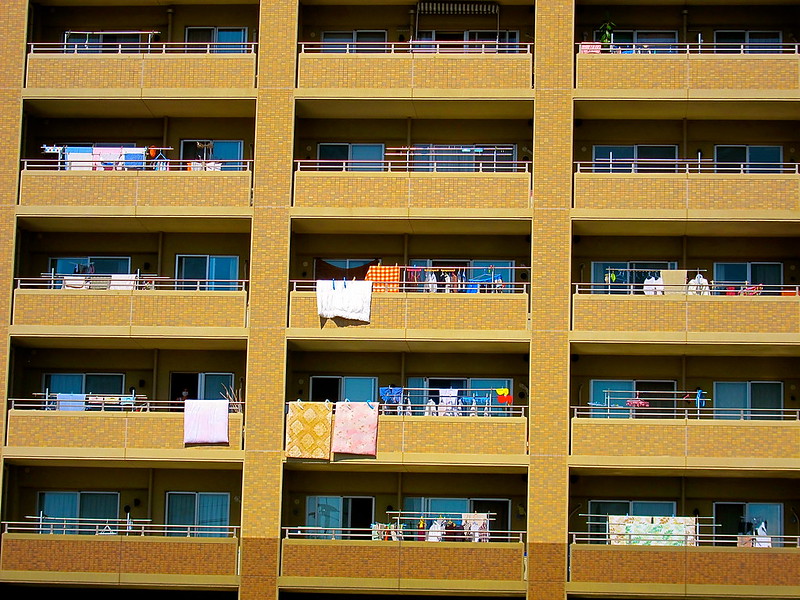
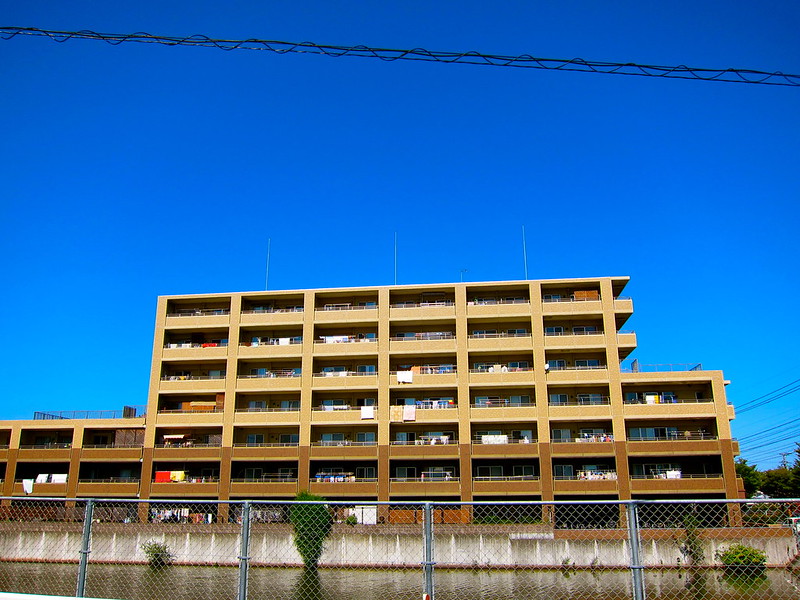
But on the bright side, I know possess a vivid image of what a Fukuoka suburb looks like. So vivid that I should probably write about it, so that trip is not in vain.

Now I will share a few images from my mis-adventure. I think you'll find a subtle and raw beauty to them that is not as deliberate as the Tenmangu Starbucks:

IMG_6438 IMG_6437 IMG_6436


When I realized my mistake I re-routed my GPS and was back on track to the real Dazaifu Starbucks which was about one hour away, including walking time. By the time I made it there I was hot, sweaty, sun burnt, and only a time to sit for a few minutes before returning to the city to catch my train to Nagasaki.  

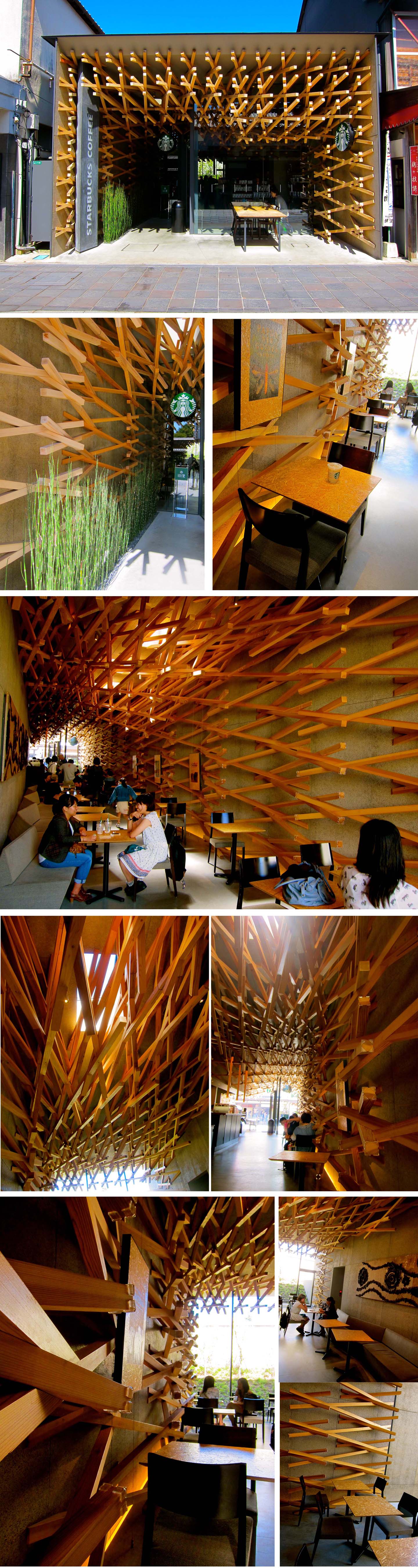
The fruit of my labor is in these photos, in which I tried to capture the harmony of the Tenmangu Starbucks. 


starbucks tenmangu collage small

Wednesday, November 27, 2013

Fukuoka Revisited

IMG_6434
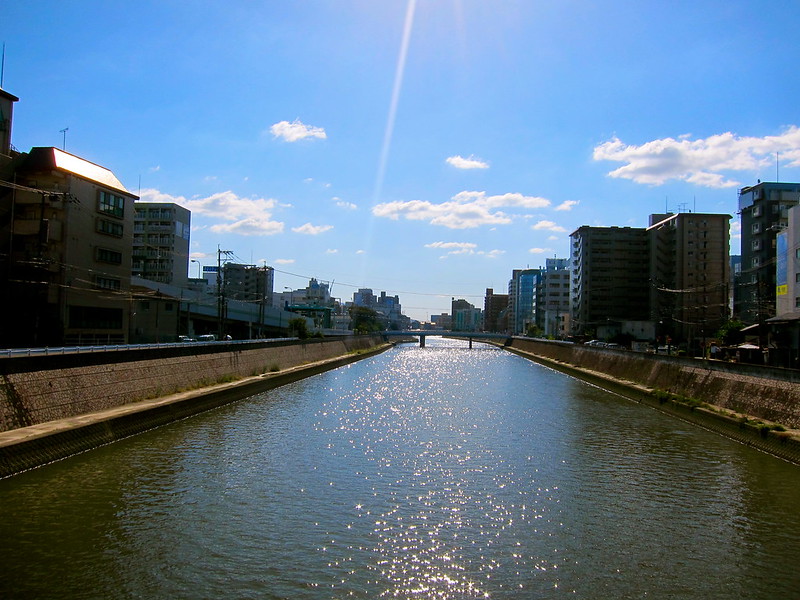
The bridge in the day time


It’s been five years since I was last in Fukuoka, and when I returned this year, it was to a very different city, or was it?

As I walked from Tenjin to Hakata Station at 2:00 a.m., and sobering up from a night of drinking with old and new friends, I wondered if the city really changed, or if I had.

Five years ago, Fukuoka was the least memorable excursion of a two-month long trip through Japan. I was on a tourist visa, and armed with a JR Rail Pass, which allowed me to ride the bullet trains all over the country. I stopped in Fukuoka for three days. It was just after a most memorable time in my favorite city, Hiroshima, but just before I was meeting some friends in rural Shikoku.

I was alone in Fukuoka. I wondered the streets and ate yatai and tried to find a piece of myself in this city but it didn’t work. It felt line a non-character in an characterless city.
But one night, I met a man on the street who would become one of my very best friend for life. The kind of friend who would fly from Australia to be “man of honor” at my wedding this summer. The kind of friend you meet on the street when you are two foreigners in a city with one hostel (um, there is now more than one hostel in Fukuoka).  

He was a tourist from Australia, midway through a months-long trip like myself.
He asked for directions, I asked him out for a drink.
The rest is history.

On that fateful night, we also met two Japanese girls at Tsutaya Bookstore’s Starbucks. It was 2:00 am. One girl approached me in English and said her friend wanted to speak to me. I don’t remember that girl at all now, but I remember her friend.
We kept in touch over the year through social media, and I met that friend-of-a-stranger-in-a-bookstore once again on my trip to Fukuoka.
In fact, she’s my friend now.

We had an amazing meal at a popular Fukuoka restaurant. The course dishes were from various parts of Kyushu, with the main entry being Fukuoka-style Motsu-nabe, which is a soup of intestines. It was one of the best meals of my life.
And by the way, that friend-of-a-stranger-who-is-now-my-friend also bought along a friend of her own, who is now also my friend.

We capped of the night with karaoke in a smoky room in Tenjin.

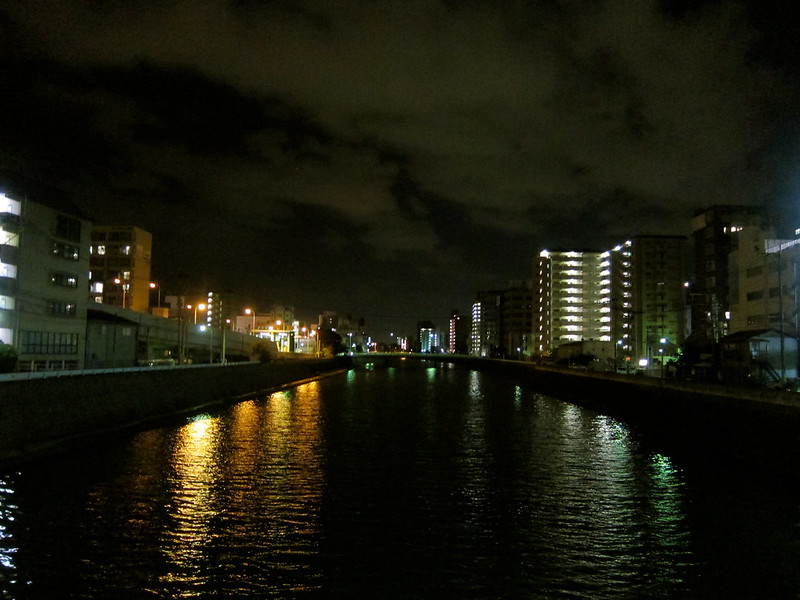
And I walked back to my hostel at Hakata station, but not before stopping to pause at bridge in the middle of the night. The scene demanded more than a passing glance.
I stayed there for several minutes, looking out at the cityscape, until I realized that I was drunk, and leaning over a bridge at 2:00 am, and it probably made for a worrisome scene.

IMG_6428
The bridge at night


I decided this year that I love Fukuoka.

Because I met my best friend there five years ago.  
Because I have friends living there now.
Because I had an awesome meal of cow intestines.
Because of the beautiful scene at the bridge at night.


Sunday, October 21, 2012

Japan Journey 2008


I took this trip to Japan nearly four years ago, but it was so awesome that it really needs a place here on this blog.

At that time, I had already been to Japan about five times, but only to Tokyo and my friend's hometown of Tsukuba (one hour away from Tokyo). At some point, when I was back in American, I noticed myself saying things like, "Oh I love Japan", "Japan is so....," "Japanese people are so...," BUT I hadn't even seen Japan outside of Tokyo!
That's like someone outside the U.S. only visiting New York City and then returning home saying, "I love America," "Americans are so..."
The rest of the US is vastly different from NYC. The culture, climate, and the food can change dramatically from one state to another. To get a good sense of America you've got to travel coast to coast, with some time in the Midwest and definitely the South.

So that is just what I did. I decided to explore as much of Japan as I could with a 30-day JR rail pass (back then it was about 100 yen to the dollar, so it was somewhat affordable). Traveling trough Japan is so much more feasible than trying to cross the U.S. by rail. Japan is a tiny country and the bullet trains are so fast,  I hardly felt like I spent much time on the train at all. Another benefit of traveling by train in Japan is the ability to sample delicious cuisine at  each station, known as ekiben. Let me also just say that this journey was made ten-thousand time easier by Hyperdia, the online timetable for all trains in Japan. Without this website,  my spontaneously-planned trip would not have been possible.

Let's begin!


I was already very familiar with Tokyo by the time I made this trip, having been there several times. I spent over a week and a half in Tokyo when I arrived. Mostly, I wanted a chance to visit all of my friends and plan my journey. This is an image of the famous Shibuya Crossing. It never fails to impress tourists with thousands of pedestrians crossing every few minutes.


My next trip was a mere three hours south of Toyko, to the city of Osaka. I had been there once before, but only for a few days. My only memory of Osaka from that first trip was that it rained the entire time, so I never left the home of the family with whom I was staying. This time, I decided to give the city another shot, and really check it out. I stayed with a friend in a sleepy suburn about fourty minutes from the city center by local train.We visted all the typical sites like Amemura and Osaka castle.
My first impression after a week in the city was that, despite being the second largest city in Japan, it is no where near as urban as Tokyo. Writing this entry now, having been to Osaka several times, I have come to have many wonderful memories in this city, mostly because of the great friends I have made.


I fell in love with Hiroshima from the moment I arrived. I thought this would be a dreary little town with a bomb museum, but oh I was so wrong. Everything wonderful is in Hiroshima. Only a week before I arrived I discovered I had a friend there. She was a former roommate of mine in Los Angeles, but she had since moved back to her hometown of Hiroshima, and was very keen to show me around. We attended a festival at Hiroshima castle, went to Miyajima, ate maple leaves and Hiroshima-style okonomiyaki.
I was so smitten with this city that I think one day I will have to write about it in more detail. It has the charm of a small town, but all the amenities of a big city. This has became my new favorite place in Japan.


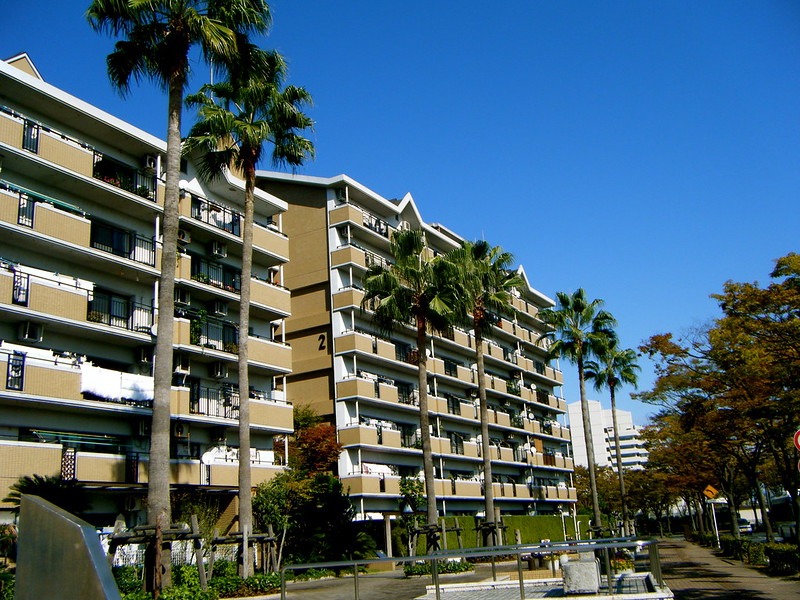
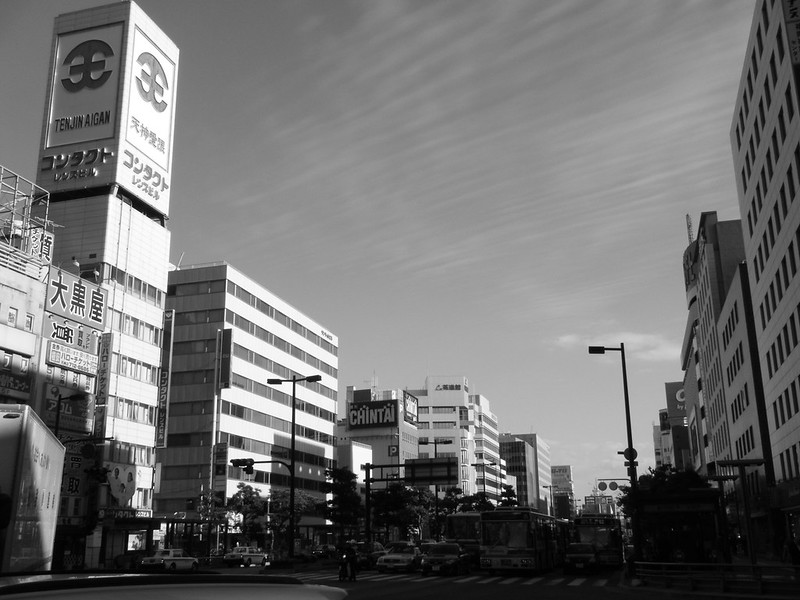
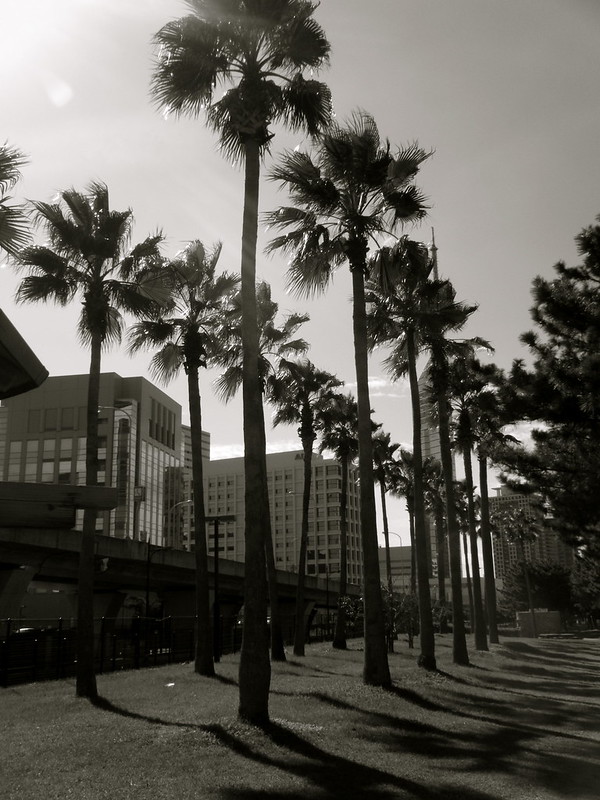
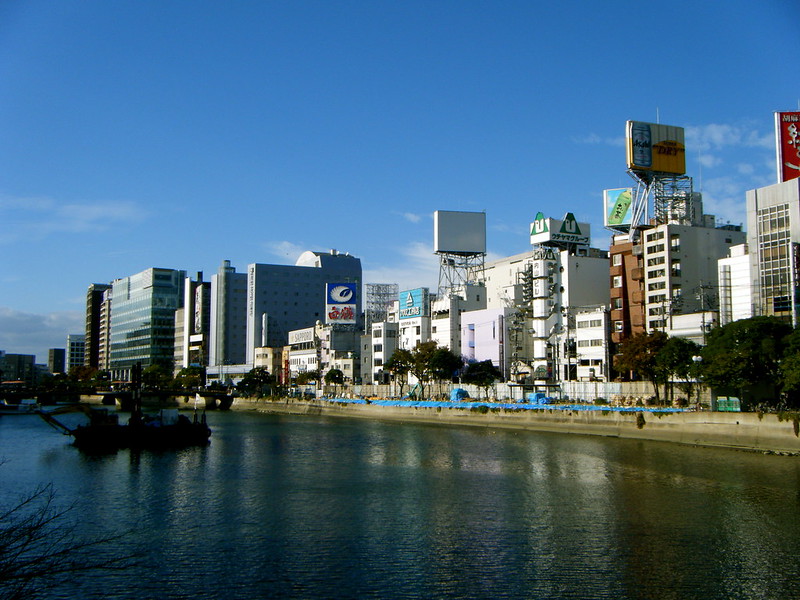
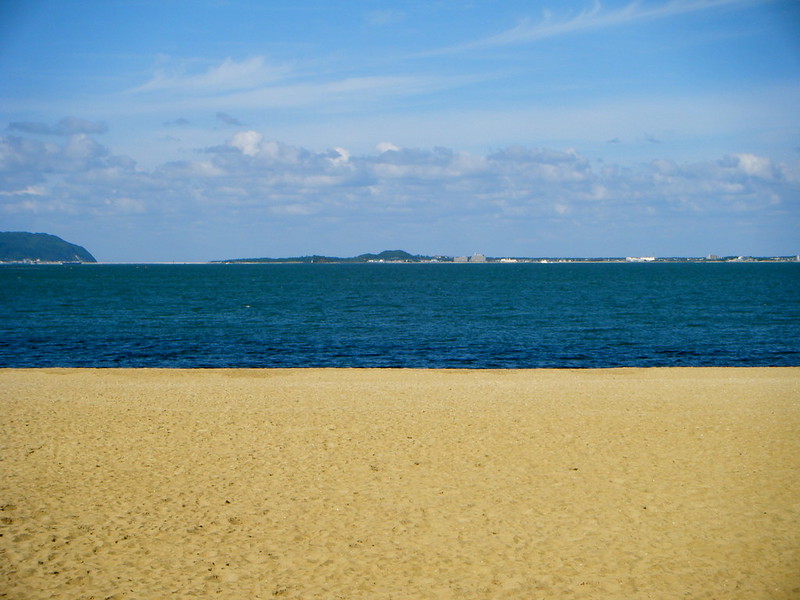
Fukuoka is the largest city on the main island of Kyushu, which is the most southern of the four main islands of Japan. Upon first impression, I felt that Fukuoka was a lot like southern California. Despite being October, it was hot and tropical. Palm trees lined both sides of the wide streets, and high rise condominiums looked out over white sandy beaches.
In Fukuoka, I ended up meeting my best friend and travel partner, Danny, from Australia. I will tell that story in another post someday, but the two of us shared many good memories in Fukuoka.


Imabari is small town located on the northers edge of Shikoku, the second most southern of Japan's four main islands. Although large in size, Shikoku is sparsely populated and very rural. Japanese consider this whole island to be inaka (countryside). When I told my Japanese friends I was going to Shikoku the first question they ask is "why???" which is also accompanied by a look of confusion. I did't bother to tell them I was going to Imabari, because that would have elicited the response, "where's that?"
Well, this was my first real experience in the Japanese countryside. I had a good friend from Tokyo who moved to back to her hometown of Imabari to have a family. Imabari was a charming town, but there was no train or bus (at least that I saw), so we often had to take a taxi, which was inconvenient. Also, I had a difficult time understanding local residents (in Japanese - mind you), especially elderly ones, because they had strong accents.


Only a few minutes away from the city of Kyoto, Maizuru is probably also considered inaka by most Japanese. This is a small coastal town with a large port and many fish markets. Again, I would have probably never gone if it were not for a very good friend who lived there. I am truly lucky to have met Japanese people all over the world, and now I can visit them in their hometowns, and experience things many tourists don't get to experience.


Speaking of tourists, Kyoto was my second to last stop on this trip, and at this point I was getting really tired of traveling. Packing up my bulging suitcase every few days and moving to the next hostel got old quickly, and I was just not ready for the chaos that ensued in Kyoto.

This is the city that every foreigner imagines when they think of Japan. The temples, the shrines, the geisha, they are all here in Kyoto, along with the thousands of tourists that flock to see them. Seriously, there were more white people in Kyoto than at a suburban mall in Minnesota. Too many white people, if I may say so myself. I was so annoyed by these masses of tourists and their large, clumsy backpacks that I gave up walking on the main streets entirely, and took back roads as often as I could.

Also, the bus system was lousy and expensive in Kyoto. The sites are not very walkable, and I was in no mood to stand on a sweaty bus squeezed in between half the citizens of New Jersey just to take some cheesy photos near a temple. (Can you tell I was in a sour mood?) So I didn't end up seeing much in Kyoto. I mostly slept in the hostel during the day, and headed out a night. I did manage to see the Inari and an awesome cemetery though. 


This was the last stop of my journey before heading back to Tokyo to catch my flight home. Nagoya is right in the middle of Osaka and Tokyo, so it makes for a great stop if you really can't sit still on a train for 3 hours. I also had a friend in Nagoya, but at the time I was visiting, he was studying in the U.S., so I ended up hanging out with his mom. I was pretty nervous, because she does not speak  English, and my Japanese is nothing to brag about. Somehow, we managed to have a great time. I ate the famous eel dish, and we visited many of the main attractions in Nagoya.

In all, this whole trip was one of the most memorable I have had in Japan. I checked off three of the four major islands (Honshu, Shikoku, and Kyushu), and most of the major cities on each island.

Next stop, Hokkaido! (coming soon in 2013?)

Friday, February 3, 2012

Train Food: The 駅弁 (Ekiben) of Japan
In fall of 2008, I set out on a journey to sample all of Japan's wonderful Ekiben. Well, "all" might be impossible, so I hoped to sample "some" of Japan's ekiben. Ekiben are basically bento boxes from train stations. "Eki" means station, and "ben" is short for "bento." Every major station in every major city has its own special ekiben.
Of course, while my decision to travel Japan  was well-planned, my decision to sample every bento was not. Thus, with little research, I arrived at the train station, ill-prepared and indecisive.

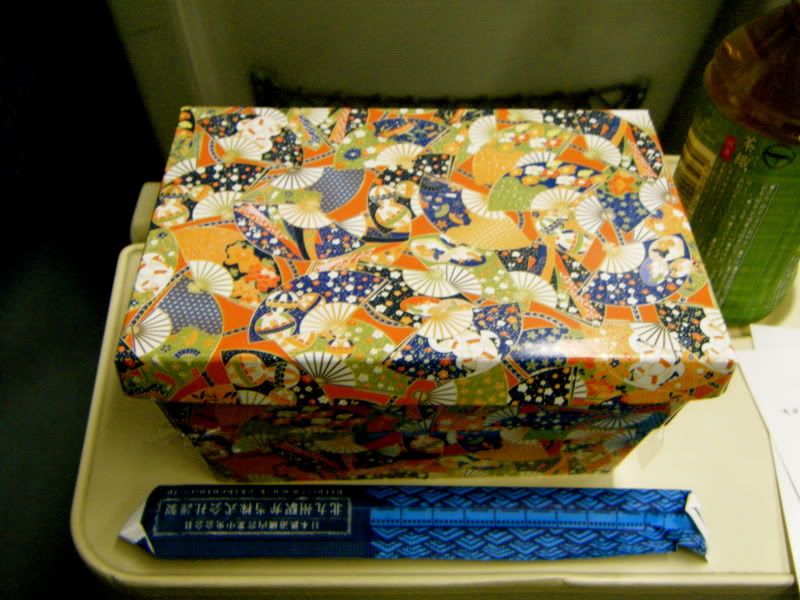
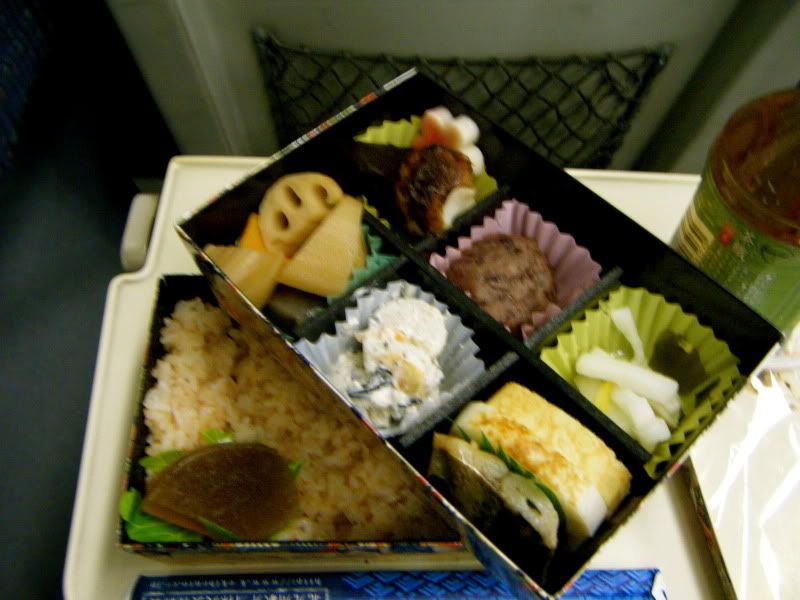
Bento #1: Tokyo


This was the first bento I sampled at Tokyo Station. There are a couple things I quickly learned about ekiben from this experience:

1. They are often small and inadequately-sized
2. They are expensive as hell
3. They are not all appetizing

Now, this is coming from someone who loves Japanese food, natto and all. I am no fussy eater, but some of the stuff in bentos was bland or just plain nasty. And to top it off, they were expensive. I was hoping to pay around 1,000 yen (about $10 USD back then - god I miss those days) but all the benots I found were more like 2,000-3,000 yen.

At least the cool part was that they often came in elaborate packages, and were stacked into cute compartments. 


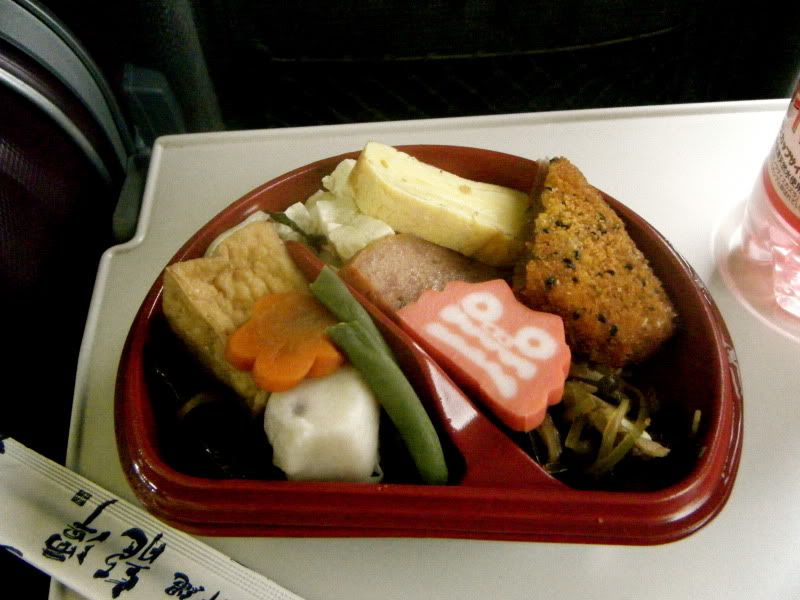
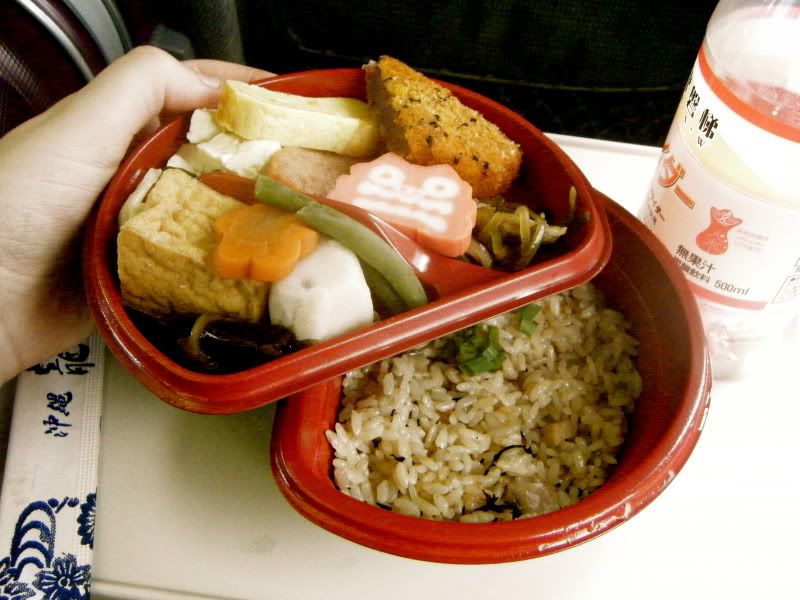
Bento #2: Fukuoka

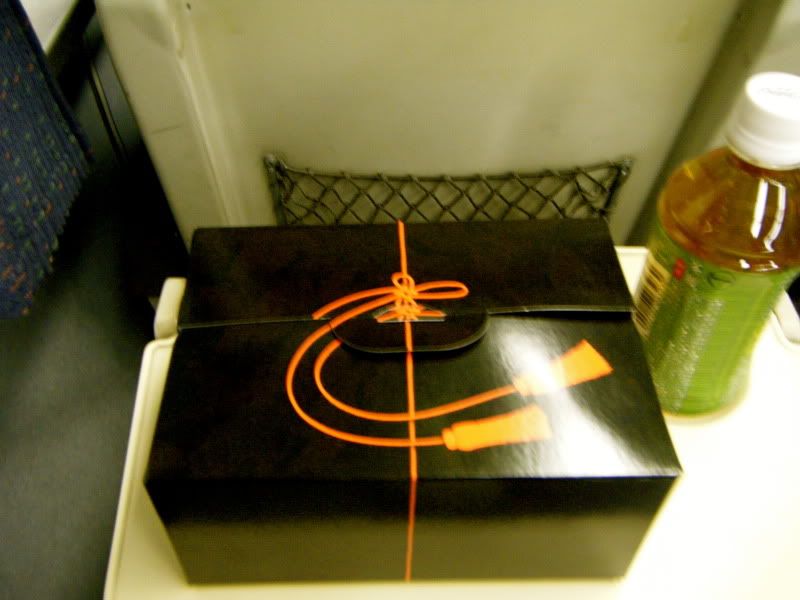
This next bento is from Fukuoka. The rice has Mentaiko, which is the specialty of Fukuoka. Again, it came in a very elaborate package.


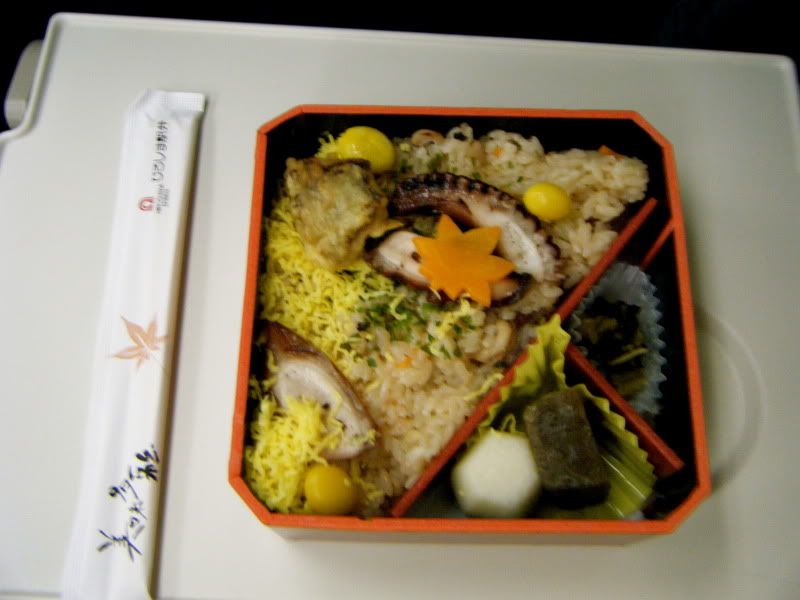
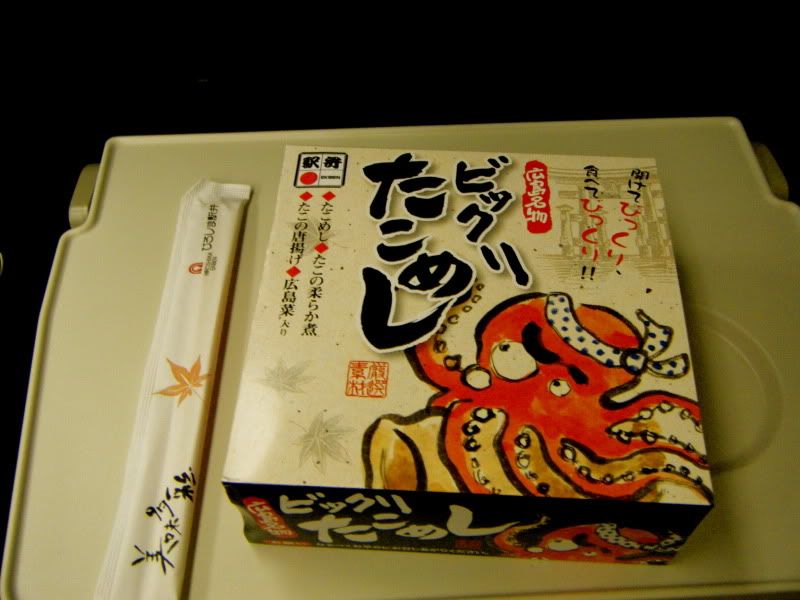
Bento #3: Hiroshima

This last bento is from Hiroshima. This was around the time when I began to tire of bentos.


Looking back on it, I should have researched the specialty of each city, so I knew what to look for. I also should have been mentally prepared to spend three times as much as I planned to. Buying cheap bentos was not the way to experience Japan.  Too bad this awesome ekiben website was not around back then.

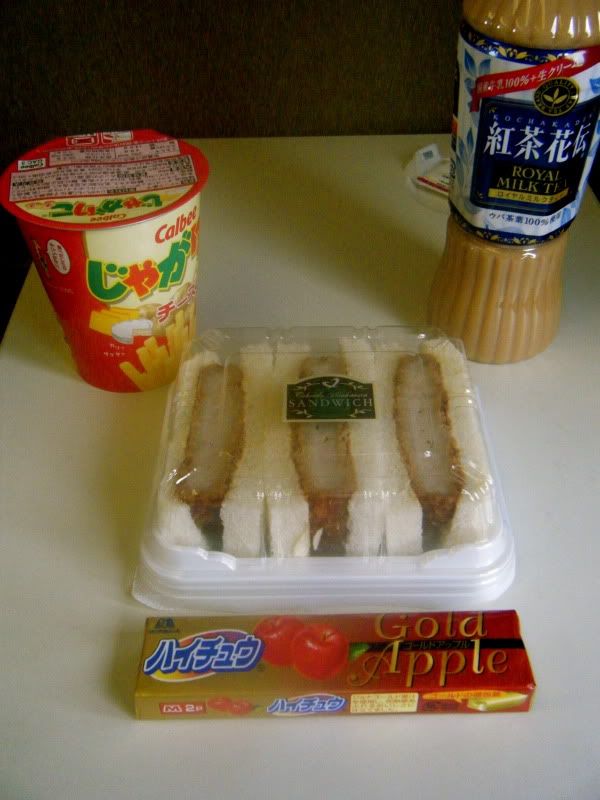
Halfway through my trip I gave up on ekiben, and settled instead for some good eats from the convenience store. I immediately fell in love with convenience store crust-less sandwiches. Below is a Katsu sandwich from Osaka. I paired it with some chips and milk tea.


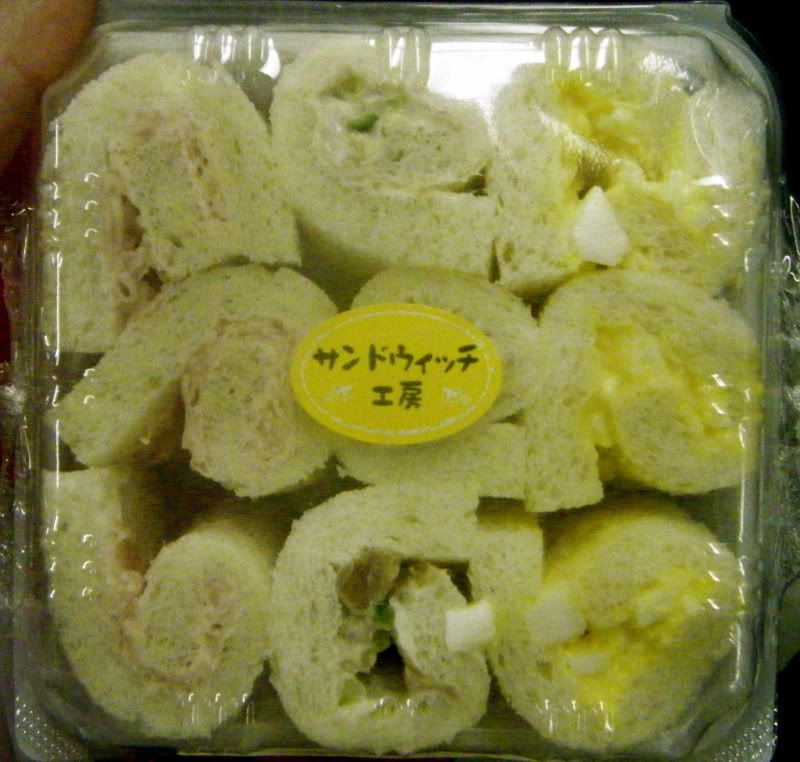
Also in Osaka were my favorite sandwich rolls. They are mostly egg, tune, and vegetables. These were the cutest sandwiches I found on the whole trip.

Leopard nights

Bought this leopard coat at a thrift store in LA about 8 years ago. I loved it when I found it - I had been looking for that exact coat for ...