Monday, March 25, 2013

The Xinbeitou Library


I was first tintroduced to the Xinbeitou Library aka "The Fantasy Treehouse" through the blog "Girl Meets Formosa" when I was searching for things to do in Taipei. Now, my partner happens to be from Taipei, but when I went in March of 2012, I was only accompanied by my Taiwanese-Japanese friend from middle school. My partner gave no advice as to how I should spend my time in the big city. This is either because I didn't ask for advice, or because when you grow up somewhere, you don't really know how tourists spend their time there. My friend, on the other hand, was well-versed in things to do as far as tourism goes....but I'm no ordinary tourist, and I have a particular fetish for libraries. Only after I returned from Taipei did I learn that my partner had full knowledge on the Xinbeitou library and had even been there several times! Then why did I search the Internet to find this place!? Oh well.


The journey begins on the Taipei MRT, where you board the Xinbeitou line from Beitou to Xinbeitou ("New Beitou"). Xinbeitou is famous for its hot springs, and even though it is only a half hour from the city center, it feels like you've entered the wilderness (or I'm just being dramatic). The inside of the train tries (in a cute but cheesy way) to imitate this natural beauty.


The gardens around the library were very well-landscaped. The library is located right in the middle of a crowded public park, which is awesome...on a less crowded day.


The library's roof juts out from the forest. It's wooden frame blends in nicely with the landscape, but its sharp angels also contrasts with it.


I took a lot of pictures outside the library, because the pairing of architecture and nature was so harmonic in this space.


On the other side of the library there were far less tourists, so I could photograph in peace. Some shots don't even contain a single person in them.


A profile shot of the library shows the crooked edges of the balcony mimic the ripples in water in the of a creek nearby. 


Alright, so when I googled the Xinbeitou library, I was surprised to find few photographs of the inside....

Now I know why.

Technically, it is against the library rules to photograph inside the building. The librarians are watching tourists like hawks, ready to reprimand them if they even so much as pull out a camera.  I tried to sneak a photo when I thought no one was looking, but I was caught!

Of course I was so embarrassed that as soon as the librarian walked away, I tried to sneak another photo, this time it was big trouble. I was taken to the front desk, where I explained in the worst Chinese anyone has ever heard that I was a blogger and  I just wanted to take pictures for my blog. They must have understood my message, because I was then required to fill out a form, and presented with a photography pass!

Success!


But now I have to wear this corny pass when I walk around the library, which makes me look so dopey, and I still cannot photograph any people (and people were everywhere) even myself.


View from the top balcony

Taipei: city and jungle

Woops! I guess I missed that rule about not photographing people

 A rare look inside the library!


A walk around the gardens in really worth doing if you have made the a trip to Taipei. My friend thought I was crazy for going all the way up to Xinbeitou just to photograph a library. This however, was one of my favorite parts of the trip. It was the only time I actually rode the trains by myself, and the view from the windows of the train reveals a very different part of Taipei than what you will see from  the 101. I really recommend this trip, if not for the library, then for the hot springs. And if not for the hot springs then just for the chance to experience a metropolis in the heart of a tropical paradise. 

Sunday, March 17, 2013

And so begins Spring

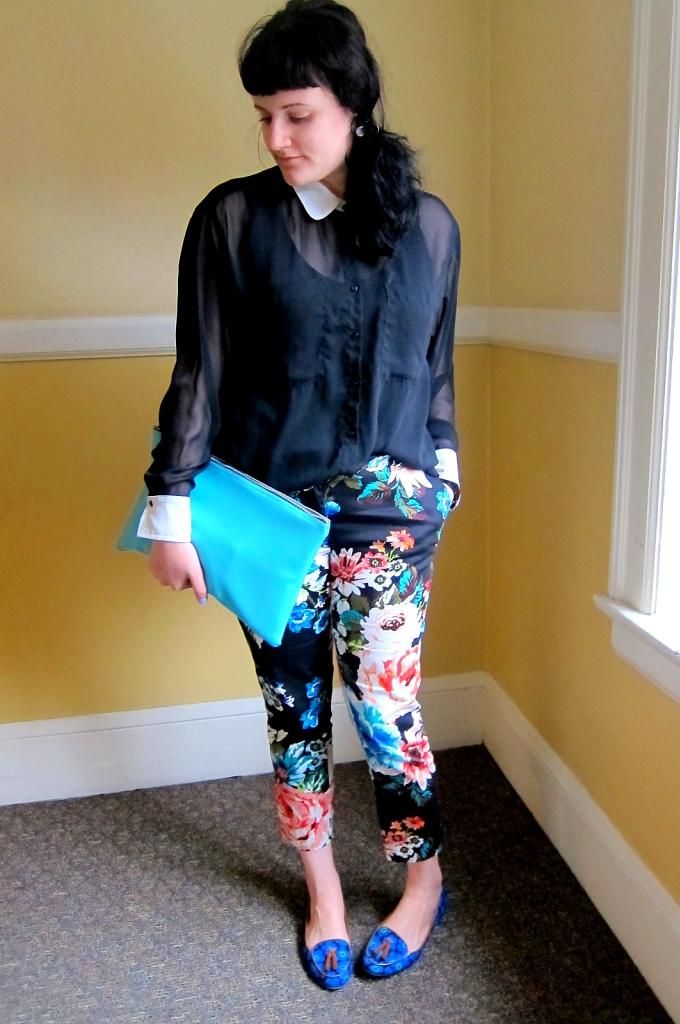
Style posts are pretty rare for me in the winter. I just realize that last winter I didn't post more than twice for the months of January and February. There are a few reasons for this. First, there are so few hours of daylight, that I barely get a chance to go outside and take pictures. Secondly, it is very cold and rainy around this time of the year, so I don't exactly want to be outside taking pictures anyway. And third, I am usually just wearing the same wool coat every day, so my winter wardrobe is not as diverse and colorful as I would like to to be. Sigh...

Today was the first day of the year that I left the house without a coat. I wanted it to be spring so badly....


Shirt: American Apparel 
Floral Pants: H&M
Shoes: Target
Bag: Faux Leather,Spring 2013 Collection


Wednesday, March 13, 2013

What I ate in Hawaii

Hawaii was a huge food trip for us. I had been dreaming of spam musubi and kalua pig for a looooong time. It's amazing that I've been on 15-hour flights all over the world, but have never taken the 6-hour flight from the West coast to Hawaii.

When I finally went, my food list was pretty substantial, and my expectations were high:

spam musubi, plate lunch, poke, shaved ice, coconut, fruits, McDonald's, 7-11, Banh mi, Chinese, Japanese, Korean, poi, afternoon tea, puka dog, Zippy's, tiki drinks.


  1. Food I wished I had but didn't:  Korean, there is not much in Portland so I have to eat it every chance I get.
  2. Food I had but wished I didn't: poi, it was not great
  3. What should have been on the list: sushi! It was great in Hawaii, and I only had the cheap stuff. 
  4. Biggest surprise: poke, I had no idea how many different kinds there were, and they are all delicious!
  5. Most delicious meal:Da Kitchen in Kahului, which was a feast of spam, kalua pig, salmon, rice, and macaroni salad
Some favorite foods:

Awesomely fresh coconut from Honolulu's Chinatown. After drinking the juice, they cut open the coconut and you can use a piece of the shell to scoop out the meat.


Combo meal from a place called Zippy's. I got the fried chicken with a corn and rice. Pretty good for an all-night chain restaurant.


On night in Maui I wanted to have a barbeque. We bought everything at a grocery store and ahd hot dogs, hamburgers, and lemon ice tea.


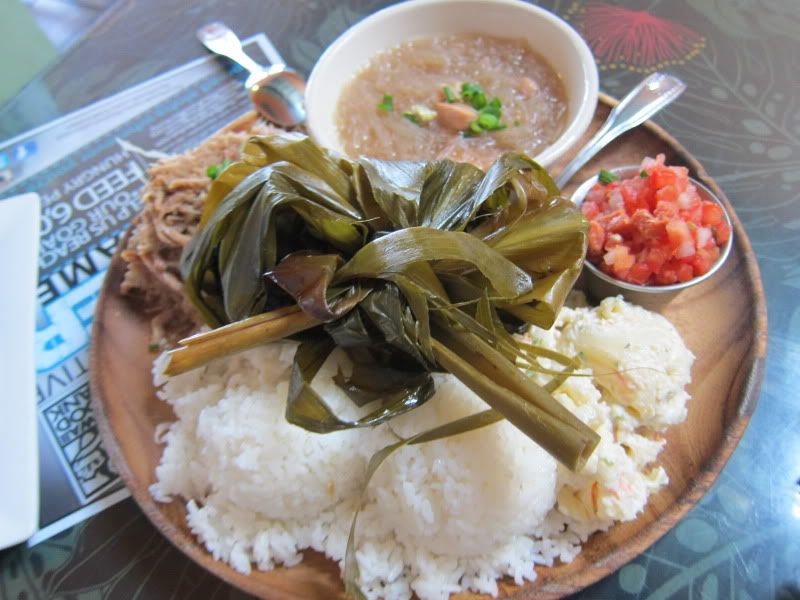
This fantastic piece of art is the Hawaiian Plate from Da Kitchen in Kahului, Maui. "Pork Lau Lau, Kalua Pork, Chicken Long Rice  and Lomi Salmon."
http://www.da-kitchen.com/


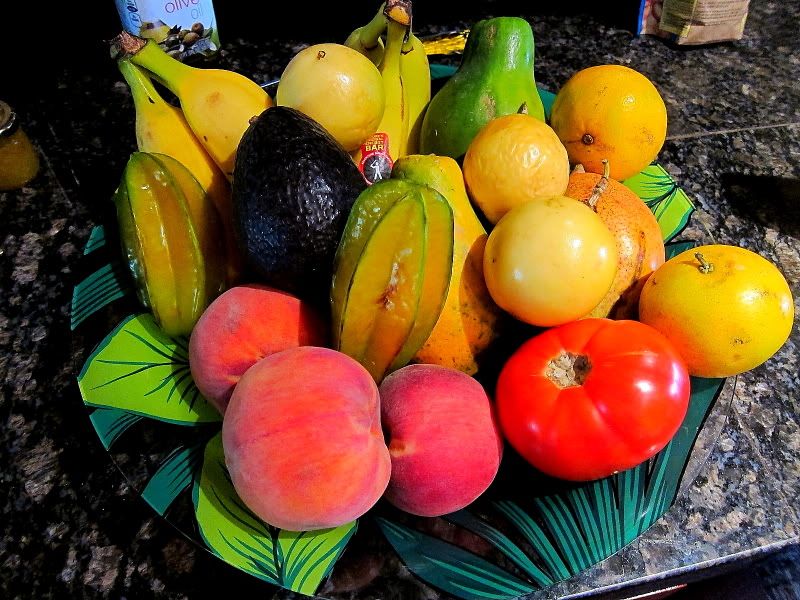
All local produce from a Maui farmer's market. Bananas, lilikoi, papayas, oranges, starfruit, avocado, peaches, and a tomato. Yeah, that was about two day's worth of produce for us. We made three trips there in only one week!


Guava, Mango, and Tamarind (my favorite!) shaved ice from Ululani's Shaved Ice in Maui.


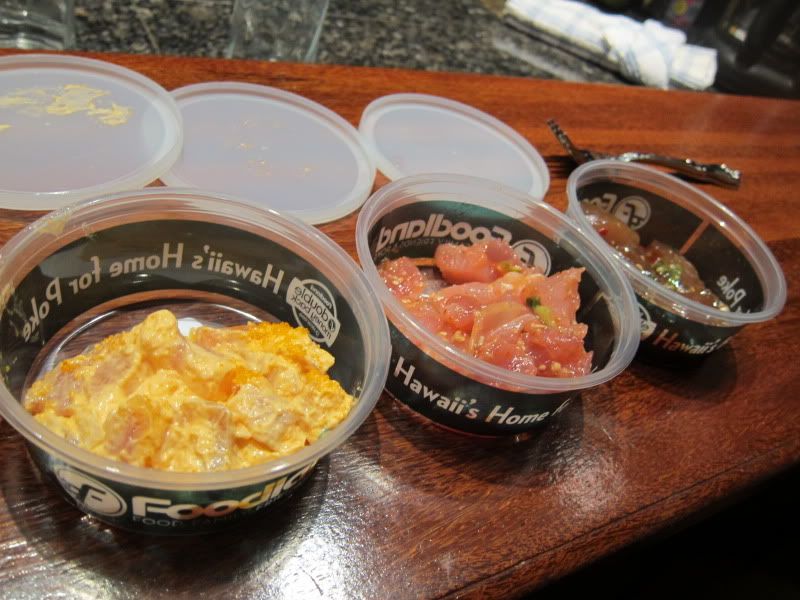
Three different kinds of poke (marinated ahi tuna) from the Foodland supermarket in Maui. Foodland was our go-to place on the island. We must have gone every day and tried about ten different kinds of poke during our stay.


Kalua pig plate lunch from Da Kitchen. Best Kalua pig I have ever had.


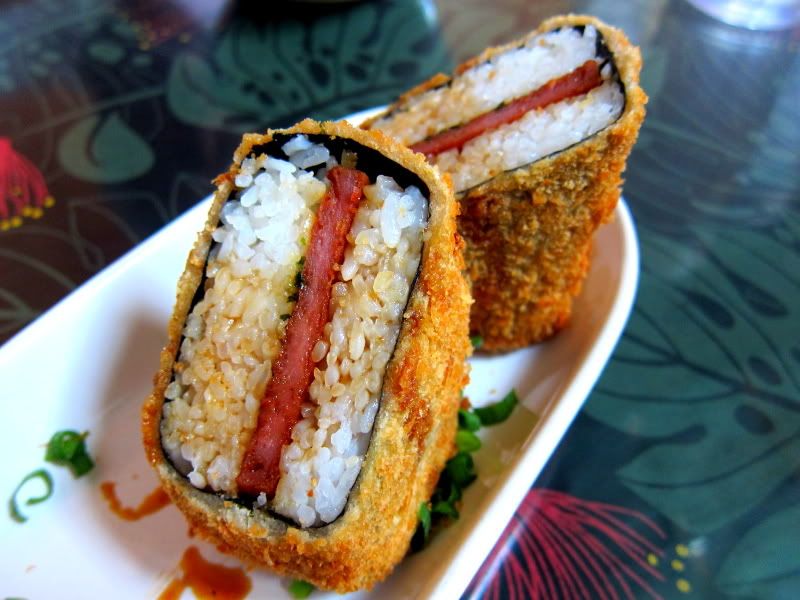
Fried Spam Musubi from Da Kitchen. I loved how the spam was wrapped in the middle, instead of on top. It made the musubi much easier to eat. 


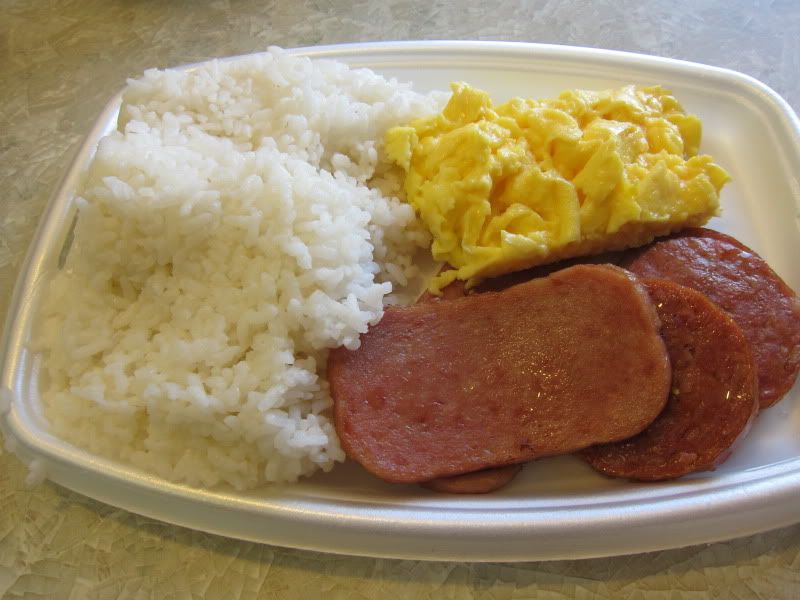
McDonald's spam and Portuguese sausage breakfast plate. At this point, I was a little sick of spam, though I loved the Portuguese sausage. read more about McDonald's Hawaii here.


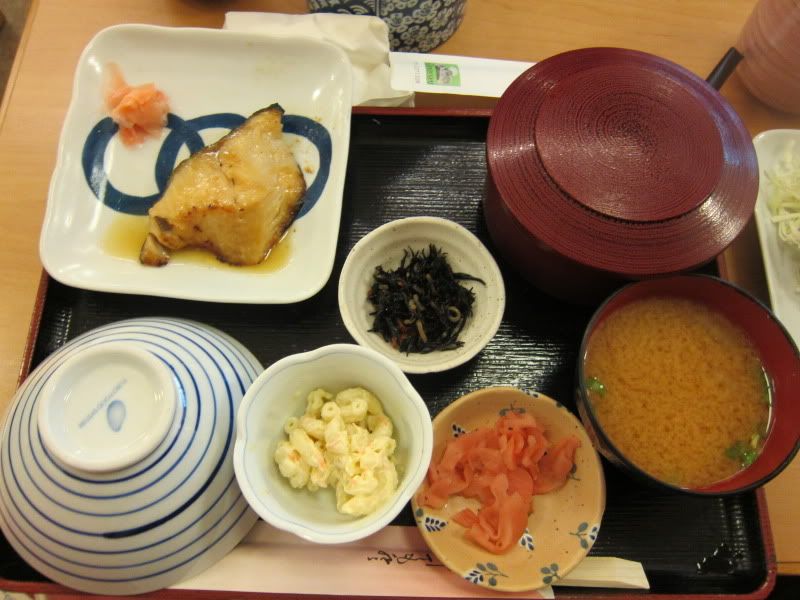
Japanese meal set from a restaurant in Honolulu. This was pretty authentic, but given that there are so many Japanese people in Hawaii, I would imagine competition for Japanese restauratns is fierce. This palce was packed and we waited a long time.


Also at the Japanese restaurant in Honolulu, we ordered poke and agedashi tofu.


Friday, March 8, 2013

Street Snap Taiwan

I've been meaning to post this for a while, but Nylon did another Street Snap featuring Taiwan. Oh my favorite place! One day I will live amongst your fashionable streets.


Source: Nylon Japan, July 2012

Tuesday, March 5, 2013

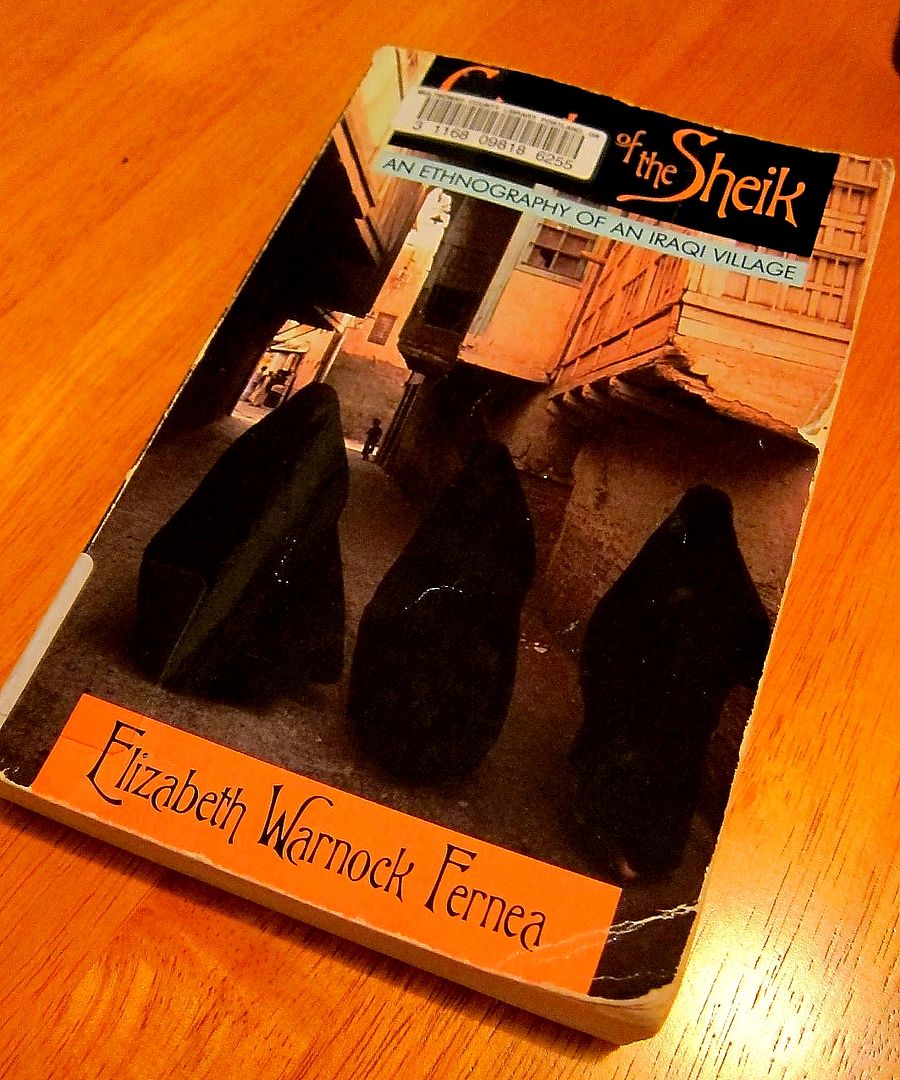
Guests of the Sheik


Lately I've been on kind of an ethnographic binge.  Perhaps this is because I just finished my degree, and now I'm wondering what to do with all my free time (yeah right). Actually, I did recently complete an ethnography on Iran for my final course, and in doing so I gained such an appreciation for ethnographies and ethnographers.

I was hoping to find some good reading material this winter, and Amazon kindly guided me to "Guests of the Sheik: An ethnography of an Iraqi village." I'm sure the only reason this book came up in my search engine was because it had the word "ethnography" in the title. I wasn't particularly looking for books on Iraq, but this one caught my eye because it was written by a woman, about women.

After not buying it on Amazon, and instead checking it out from the local library, I was shocked to find that it had been published in 1969, but written about her journey which took place in 1958. 1958! Here I was thinking I was going to get a recent look at Iraqi women and the present issues facing them, but this book was written over 50 years ago. I was so disappointed that I planned on returning it, but since I didn't feel like making another trip to the library, I decided to give it a chance and read the first chapter.

The book captivated me from the first few pages. Elizabeth "Beeja" Warnock, is a newly-wed, who will has joined her anthropologist husband Robert "Bob" Fernea on his two-year field research in the remote Iraqi village of El Nahra.  Before I knew it, I was a quarter into the book, and Elizabeth  was baking western bread for her Iraqi neighbors, and watching as they spit it out on the floor and laughed about how awful it was. "When Bob came home he told me to forget the whole incident, to remember that we were in El Nahra to do some specific work, not prove any romantic theories about humanity being the same everywhere." (77)

That's when I knew I was in for a treat.  I went into this book thinking that it would be some shallow criticism of Iraqi culture, written by an upper-middle class white women who didn't belong there in the first place. I was all but ignorant of the fact that Elizabeth Warnock is a totally famous researcher, well-informed, and a strong advocate of women's rights in West Asia. She is also, as I came to realize, a captivating writer. I would describe her in the way Henry Miller did of a fellow traveler: "when she talked about her wanderings she seemed to paint them: everything she described remained in my head like finished canvases by a master." (The Colossus of Maroussi, 1941).

From the last chapter of the book, this image remains in my mind:

"I stood with my back to the men, gazing out at the long, flat brown landscape, cut into tiny squares by the canal banks, the enormous sky dwarfing it and yet protecting it as well. The winds care from the desert and blew away the spring, but some sank into the canal and was thrown up again against the slit in the fall. The sun burned the earth till it cracked, but the winter rains filled it until it could live again. Every fall the fellahim planted grain in the square plots, and the Euphrates River water, pipped into these small canals, watered the grain and the people lived for another season. Thus it had been for more than five thousand years." (326)

But what I like the most about Warnock is her humility. Even after learning to speak fluent Arabic, living amongst the women for over a year, and making a pilgrimage to Karbala with them, she still admits to understanding very little about their culture:

"How little I really knew about the society in which I was living! During the year I had made friends, I had listened and talked and learned, I thought, a great deal, but the pattern of custom and tradition which governed the lives of my friends was far more subtle and complex than I had imagined." (266).

Even though she published this book over 50 years ago, her stories are still so relevant to the understanding of modern Iraqi culture. An internal dialogue she had with herself at a night club in Baghdad mirrors ones that I have had with myself, when caught between two cultures:

"I could tell my friends in American again and again that the veiling and seclusion of Eastern women did not mean necessarily that they were forced against their will to live lives of submission and near-serfdom. I could tell Haji again and again that the low-cut gowns and brandished freedom of Western women did not necessarily mean that these women were promiscuous and cared nothing for home and family. Neither would have understood, for each group, in its turn, was bound by custom and background to misinterpret appearances in its own way." (313)

As an International Studies major, I feel that this book should be required reading for all college students, especially hopeful anthropologists and ethnographers like myself. In the U.S. we are brought up to believe that we live better than most people in the world, and that everyone should be envious of us because of our material wealth, freedom, and mobility. This was true of Warnock's generation and ti is true of mine. However, Warnock's experience in Iraq reveals just the opposite. When we try to view the world from the lens of another culture, we find that happiness and success is measured in a very different way. "They never envied me," Warnock realized, "only made me fit, as well as I was able, into their patterns." (326)

She summarizes her main point boldly in the closing statements of her book:

"[They] pitied me, college-educated, adequately dressed and fed, free to vote and to travel, happily married to a husband of my own choice who was also a friend and companion....No mother, no children, no long hair, thin as a rail, can't cook rice, and not even any gold! What a sad specimen I must have seemed to them." (316)

I would recommend this book to anyone who is trying to shake themselves of an ethnocentric view of the world, for anyone who wants to briefly step out of their comfort zone and learn about a group of people living in an entirely different way. This book did not make me want to experience what Warnock experienced in the El Nahra, but what it left em with was a great appreciation and understanding of the people in this part of the world.


Leopard nights

Bought this leopard coat at a thrift store in LA about 8 years ago. I loved it when I found it - I had been looking for that exact coat for ...